
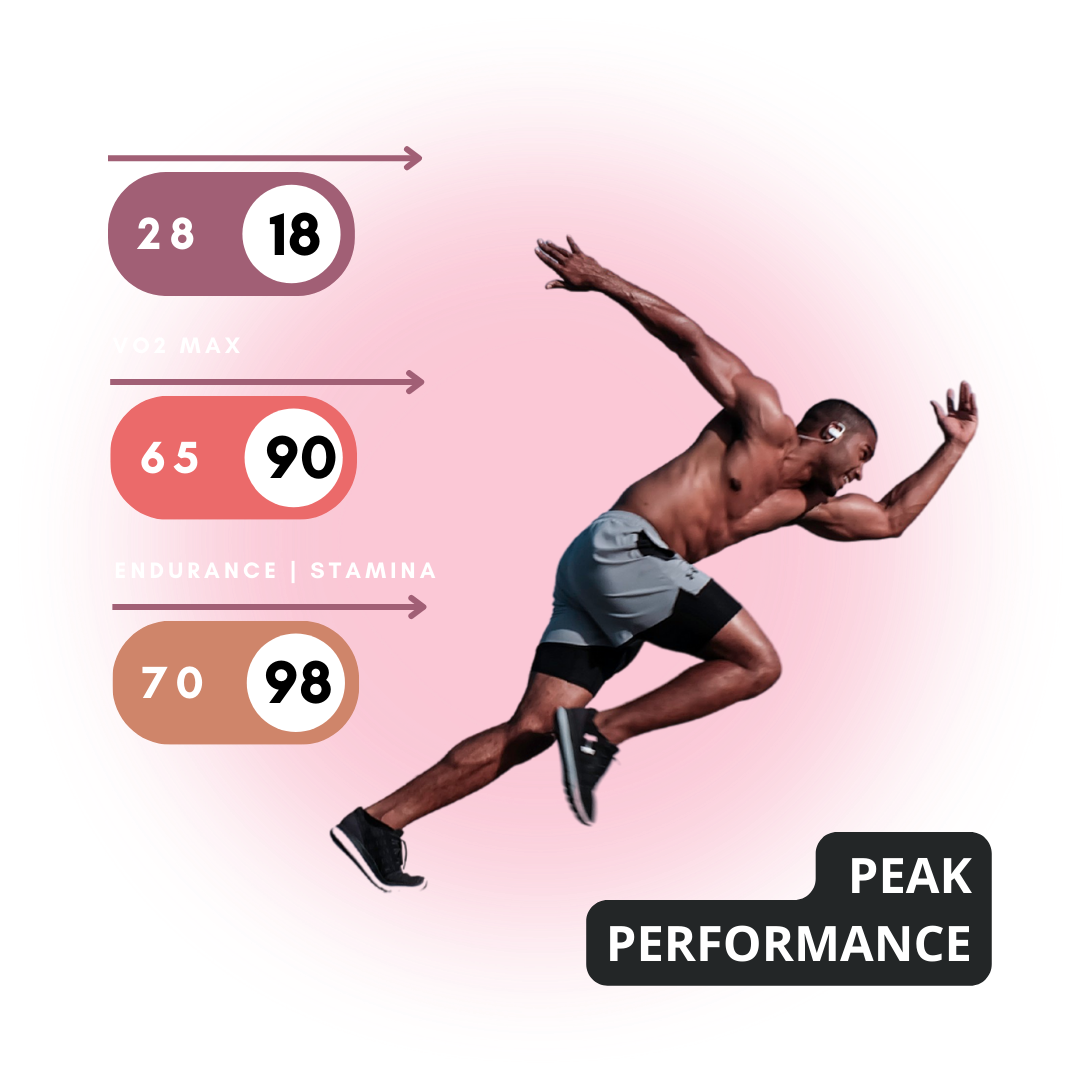
At the highest levels of competitive sport and human longevity, the difference between a championship performance and chronic fatigue comes down to biological precision.
Traditional athletic programming relies heavily on generalized rules: high-volume training microcycles, universal protein intake targets, and standard daily multi-vitamins. However, your body's ability to handle physical stress, clear inflammatory byproducts, absorb micronutrients, and digest training fuels is governed by your unique genomic blueprint. By sequencing 150+ biomarkers with LamiDNA, athletes and performance coaches eliminate trial-and-error routines.
1. The Biological Limits of One-Size Training
Two athletes following an identical microcycle can exhibit vastly different adaptations. One builds explosive power and recovers within 24 hours, while the other experiences persistent tendon inflammation, gut distress, and systemic central nervous system fatigue.
This divergence is driven by single nucleotide polymorphisms (SNPs) across muscle fiber composition, lactase persistence, collagen synthesis, methylation capacity, and hepatic enzyme velocity.
Genomic Performance Fact
Genetics dictate whether your cells convert synthetic vitamins into active co-factors, how fast your liver clears pre-workout caffeine, and whether high-volume carbohydrate loads trigger hidden systemic inflammation.
2. Physical Biomarkers & Muscle Fiber Profiling
The LamiDNA athletic panel maps your structural and metabolic capacity across core physical traits:
Muscle Power & Hypertrophy
- Fast-twitch alpha-actinin-3 (ACTN3 R577X polymorphism)
- Myostatin-regulated muscle hypertrophy potential
- Lean muscle mass acquisition & retention rate
- Fasted vs. Fed training adaptation efficiency
Endurance & Metabolic Stamina
- Mitochondrial biogenesis & VO2 max ceiling
- Anaerobic lactate buffering & clearance threshold
- Circadian clock SNPs (optimal workout timing)
- Central nervous system energy recovery velocity
3. Food Intolerance & Sensitivity Profiling
Subclinical dietary intolerances drain athletic energy by causing low-grade intestinal inflammation, systemic fluid retention, and nutrient malabsorption. LamiDNA sequences key intolerance pathways:
- Lactose Intolerance (LCT Gene): Determines lactase enzyme persistence into adulthood, distinguishing between athletes who can process dairy protein isolates and those requiring plant or beef protein alternatives.
- Celiac & Non-Celiac Gluten Sensitivity (HLA-DQ2 / HLA-DQ8): Identifies genetic auto-immune reactivity to gluten proteins that cause intestinal villi inflammation and impaired nutrient absorption.
- Caffeine Clearance Velocity (CYP1A2 Gene): Categorizes athletes as Fast or Slow caffeine metabolizers. Fast metabolizers experience significant ergogenic endurance gains from pre-workout caffeine, whereas Slow metabolizers experience elevated cortisol, heart rate spikes, and sleep disruption.
- Histamine Sensitivity (DAO & HNMT Genes): Identifies reduced diamine oxidase enzyme activity, which causes post-meal brain fog, nasal congestion, and fatigue following high-histamine fermented foods or aged proteins.
4. 15+ Genetic Vitamin & Mineral Absorption Pathways
Standard multi-vitamins frequently fail because they rely on synthetic nutrient forms that your body may not be genetically equipped to process. LamiDNA evaluates 15+ micronutrient conversion pathways:
B-Vitamin Methylation Cluster
- MTHFR (Folate B9): Identifies C677T / A1298C variants that block conversion of folic acid to active L-methylfolate.
- MTR / MTRR (Cobalamin B12): Regulates cell recycling and active methylcobalamin uptake.
- MTHFD1 (Choline Utilization): Dictates cell membrane repair and endurance neurotransmitter synthesis.
Fat-Soluble & Mineral Cluster
- BCMO1 (Vitamin A): Controls conversion of plant beta-carotene into active retinol.
- VDR & GC (Vitamin D3): Dictates Vitamin D receptor binding and bone mineral density support.
- FADS1 / FADS2 (Omega-3 EPA/DHA): Measures conversion efficiency of plant ALA into anti-inflammatory EPA/DHA.
- SLC30A8 & TRPM6 (Zinc & Magnesium): Evaluates cellular ion transportation for muscle contraction and testosterone synthesis.
5. Soft Tissue & Tendon Injury Prevention
Preventing injury is essential for maintaining consistent training progress. LamiDNA sequences specific collagen and extracellular matrix genes to flag soft-tissue vulnerabilities:
- Achilles Tendinopathy Vulnerability (COL5A1): Identifies collagen type V alpha 1 variants linked to tendon stiffness, Achilles tendinitis, and ligament tear risk.
- Lumbar Disc Disease & Back Health (COL11A1 / COL11A2): Evaluates intervertebral disc degeneration risks to adjust heavy axial loading (e.g., heavy squats, deadlifts).
- Tendon Rehab Selection: Guides strength coaches on whether an athlete responds best to heavy slow resistance (HSR) tendon remodeling or longer recovery intervals between high-plyometric sessions.
6. Precision Ergogenic Supplementation
Supplementing without genomic insight often leads to ineffective dosing or digestive strain. LamiDNA establishes exact, evidence-based supplementation protocols:
- Creatine Monohydrate & Beta-Alanine: Sequenced to determine intracellular phosphocreatine loading speed and intramuscular carnosine acid buffering capacity.
- HMB, Leucine & Essential Amino Acids (EAAs): Analyzes mTOR gene pathways to determine the optimal leucine threshold needed for maximal muscle protein synthesis.
- Curcumin, Ginger Extract & Tart Cherry: Evaluates systemic inflammatory clearance to optimize natural recovery without blunting post-workout adaptation signals.
- Ashwagandha & Rhodiola Rosea: Evaluates HPA-axis stress response genes to determine adaptogen suitability for cortisol management.
7. Universal Wearable Telemetry Integration
Static genetic blueprints deliver maximum value when combined with live, continuous biometric monitoring.
The LamiFit Ecosystem connects seamlessly with any wearable device-including Apple Health, Garmin, WHOOP, Oura Ring, Samsung Health, and Suunto.
The platform ingests continuous Heart Rate Variability (HRV), resting heart rate, pulse oximetry, and sleep staging. By merging live wearable stream data with your permanent LamiDNA genetic profile, LamiFit delivers real-time daily recovery scores, workout adjustments, and personalized nutrition nudges.
Frequently Asked Questions
How does genetic testing help athletes achieve peak performance?
Genetic testing maps an athlete's muscle fiber bias, anaerobic capacity, tendon injury vulnerabilities, food intolerances, micronutrient conversion limits, and optimal ergogenic supplement dosing.
What food intolerances and vitamin pathways does LamiDNA evaluate?
LamiDNA evaluates lactose (LCT), gluten (HLA-DQ2/8), caffeine (CYP1A2), and histamine (DAO), alongside 15+ vitamin deficiencies including Methylfolate (MTHFR), Active Vitamin D (VDR), B12 (MTRR), and Beta-Carotene conversion (BCMO1).
Can LamiDNA sync with any wearable brand?
Yes. The LamiFit application ingests telemetry from Apple Health, Garmin, WHOOP, Oura, Samsung Health, and Suunto, merging real-time HRV and sleep metrics with permanent LamiDNA genetic baselines.