
Throughout history, humanity viewed aging as a fixed, irreversible chronological clock. We celebrated annual birthdays assuming that biological decay followed a predetermined, unalterable path.
Modern geroscience has fundamentally altered this paradigm. Today, researchers recognize that while your **chronological age** simply measures time elapsed since birth, your **biological age** reflects the true functional state of your cells, tissues, and organ systems. Through epigenetic testing with LongevitYY, you can measure, track, and actively slow your rate of aging.
1. Lifespan vs. Healthspan: Adding Life to Years
Modern medicine has successfully extended human **lifespan**-the total quantity of years lived. However, this increase has often come at the expense of **healthspan**-the period of life spent in vibrant health, free from chronic disease, cognitive decline, and physical frailty.
Many individuals spend their final 15 to 20 years managing chronic conditions like cardiovascular disease, type 2 diabetes, sarcopenia, and neurodegeneration. Precision longevity aims to align healthspan with lifespan, ensuring that vitality, strength, and mental clarity persist well into late adulthood.
Core Longevity Principle
Adding years to life requires adding life to years. By suppressing cellular inflammation and optimizing DNA methylation, we extend functional vitality alongside chronological longevity.
2. Understanding the 12 Hallmarks of Aging
Biological aging is driven by twelve interconnected cellular mechanisms known as the **Hallmarks of Aging**:
Primary Genomic & Cellular Drivers
- Genomic Instability: Accumulation of somatic DNA damage over time.
- Telomere Attrition: Progressive shortening of protective chromosome caps.
- Epigenetic Alterations: Loss of precise gene regulation patterns.
- Loss of Proteostasis: Impaired clearance of misfolded, toxic proteins.
Systemic & Metabolic Drivers
- Mitochondrial Dysfunction: Decreased cellular ATP energy production.
- Cellular Senescence: Accumulation of "zombie" cells emitting inflammatory cytokines.
- Nutrient Sensing Deregulation: Impaired mTOR, AMPK, and sirtuin pathways.
- Chronic Inflammaging: Low-grade, systemic sterile inflammation.
3. How Epigenetic Clocks Measure Biological Aging (LongevitYY)
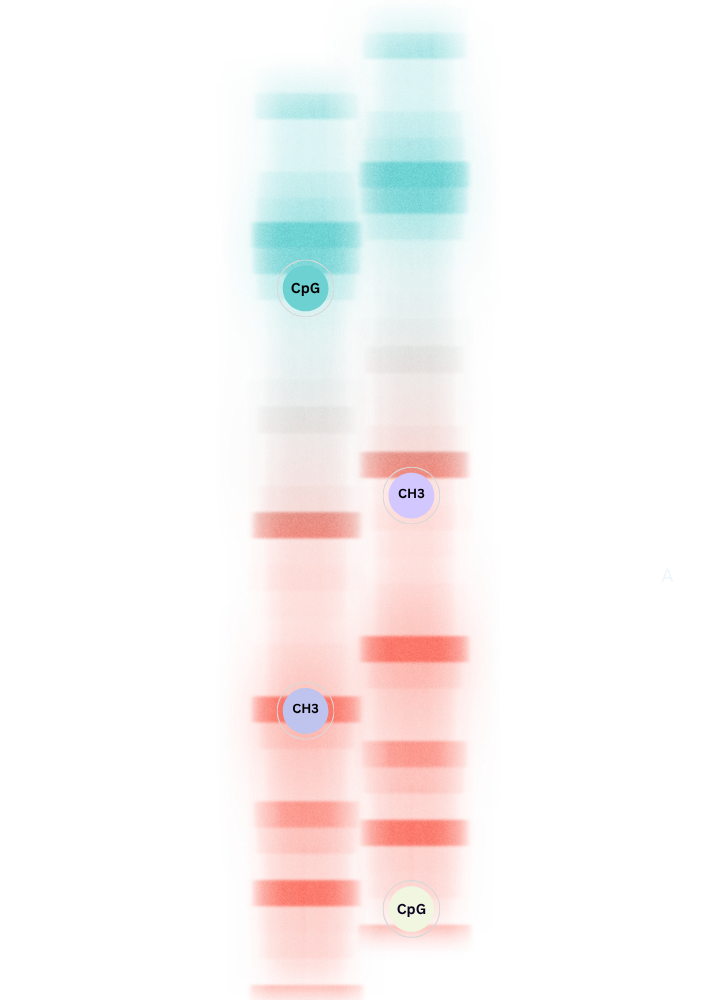
While your DNA sequence (measured via LamiDNA) remains fixed throughout life, your **epigenome** acts as a series of biological light switches. Chemical tags called **methyl groups** attach to specific CpG islands along your DNA, turning gene expression on or off in response to lifestyle, stress, diet, and environment.
The **LongevitYY Epigenetic Clock** sequences millions of these methylation sites. By comparing your methylation profile against validated algorithms, LongevitYY calculates:
- Overall Biological Age: Whether your cellular health matches, exceeds, or lags behind your chronological age.
- Rate of Aging Velocity: The speed at which you are aging per calendar year (e.g., aging 0.82 years per chronological year).
- Organ System Vulnerabilities: Specific epigenetic strain across cardiovascular, immune, and metabolic pathways.
4. Can Biological Aging Be Reversed?
Unlike genetic code, **epigenetic methylation marks are fully reversible**.
Landmark studies in human geroscience demonstrate that targeted lifestyle interventions-combining calorie restriction mimetics (like NMN and Resveratrol), circadian entrainment, resistance exercise, and methyl-donor nutrients-can measurably reduce biological age scores within 6 to 12 months.
5. The Precision Longevity Protocol
Achieving meaningful longevity requires a synchronized multi-data strategy managed through the LamiFit Ecosystem:
- Establish Genomic Baseline: Use LamiDNA to identify fixed metabolic bottlenecks, MTHFR methyl donor needs, and injury risks.
- Measure Biological Pace of Aging: Perform a baseline LongevitYY test to determine your starting cellular age.
- Sync Real-Time Wearable Telemetry: Track daily HRV, sleep staging, and active strain with your wearable device to guide daily stress recovery.
- Re-Test & Verify Deceleration: Perform repeat LongevitYY testing every 6 to 12 months to verify that your longevity protocol is actively slowing biological aging.
Frequently Asked Questions
What is the difference between lifespan and healthspan?
Lifespan measures the total length of time an individual lives, whereas healthspan measures the period spent in good health, free from chronic disease, frailty, and cognitive decline.
How does the LongevitYY epigenetic test measure biological age?
LongevitYY evaluates DNA methylation patterns across specific CpG sites in your genome. These chemical tags act as a molecular clock, reflecting the true functional rate of aging of your organ systems.
Can biological aging actually be reversed?
Yes. Epigenetic tags are dynamic and reversible. By implementing targeted precision nutrition, circadian sleep optimization, senolytic support, and continuous biomarker tracking, individuals can measurably lower their biological age.